
You may have noticed more hair in the shower drain, a widening part, or thinning at the temples that wasn’t there a year ago. Perhaps you have tried supplements, shampoos, or styling tricks, only to feel frustrated that nothing seems to truly address the problem. Hair thinning can quietly
affect how you see yourself, even if you rarely talk about it out loud.
If you are looking for a natural, non-toxic treatment that works with your body, PRP hair restoration may be the answer. At Vitality Medical Wellness Center, Dr. Sommer White, our board-certified physician with advanced training in regenerative and aesthetic medicine, offers
platelet-rich plasma therapy to support healthier, fuller hair. This article explains how PRP works, why it is effective, and what you can realistically expect from treatment.
What is PRP for hair restoration?
PRP, or platelet-rich plasma, is a regenerative treatment that uses components of your own blood to stimulate hair growth. Platelets are best known for their role in clotting, but they also contain powerful growth factors that support tissue repair, cell regeneration, and healing.
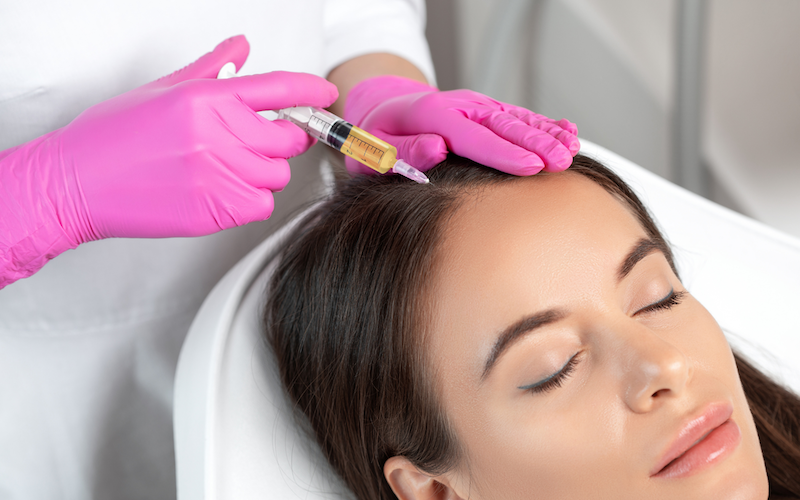
For hair restoration, a small amount of your blood is drawn and processed in a specialized centrifuge to concentrate the platelets. This platelet-rich plasma is then carefully injected into areas of thinning hair on the scalp. Because PRP is derived entirely from your own blood, the treatment is biocompatible and free from synthetic additives or foreign substances.
PRP hair restoration is commonly used to address androgenetic alopecia, thinning due to stress or hormonal changes, and early-stage hair loss in both men and women. PRP improves the health of existing hair follicles and encourages them to produce thicker, stronger strands.

How PRP stimulates natural hair growth
PRP does not rely on a single mechanism. Instead, it works through several complementary biological pathways that support follicle function and scalp health.
Awakening dormant hair follicles
Many thinning areas of the scalp still contain living follicles that have entered a resting or miniaturized state. PRP delivers targeted growth factors directly to these hair follicles. These signals help “wake up” the dormant follicles and encourage them to re-enter the active growth phase of the hair cycle, known as the anagen phase.
Extending the hair growth cycle
Hair grows in cycles, and thinning often occurs when the growth phase becomes shorter. PRP helps prolong the anagen phase, allowing hair to grow longer and thicker before shedding. By supporting a healthier hair growth cycle, PRP can gradually improve overall hair density rather
than producing short-lived cosmetic changes.
Improving blood supply to the scalp
Healthy hair follicles depend on a strong blood supply for oxygen and nutrients. PRP promotes angiogenesis, the formation of new blood vessels, in the scalp. Improved blood circulation in the scalp ensures that hair follicles receive the nutrients they need to function optimally, creating a
healthier environment for sustained hair growth.
Reducing inflammation around follicles
Chronic, low-grade inflammation can damage follicles and contribute to progressive thinning. PRP contains anti-inflammatory mediators that help calm the scalp. By reducing inflammation, PRP protects follicles from ongoing damage and supports more stable, long-term growth.
Strengthening follicle structure and hair shafts
In addition to stimulating growth, PRP enhances the structural integrity of the follicle itself. This can result in hair that feels thicker, stronger, and more resilient. Many patients notice not only increased density but also improved hair texture and reduced breakage over time.
Supporting tissue repair and resilience
Environmental stressors such as UV exposure, pollution, and inflammation weaken your skin. PRP strengthens the skin’s ability to repair itself by reducing inflammation and supporting tissue regeneration. This makes your skin more resilient to future damage while improving its ability to
recover from existing stress. The result is skin that looks and functions better.
Reducing fine lines and early wrinkles
Fine lines often appear first around the eyes, mouth, and forehead due to repetitive movement and thinning skin. PRP helps thicken the dermal layer by stimulating new collagen formation, which softens the appearance of these lines over time. Unlike neuromodulators that freeze muscle movement, PRP improves skin quality itself, allowing your face to retain natural expressions while appearing smoother and refreshed.
Supporting long-term skin health
One of the most important benefits of PRP is that it works with your biology rather than against it. Because PRP uses your own blood, there are no synthetic substances or toxins introduced into your body. This makes it an excellent option for individuals seeking regenerative, non-toxic treatments that align with long-term wellness goals rather than short-term cosmetic fixes.
Benefits of PRP for hair restoration
PRP offers a range of advantages that make it appealing for patients seeking a natural, minimally invasive solution for hair loss.
Uses your own biology: Because PRP is created from your own blood, it works in harmony with your body’s natural healing processes. There is no risk of allergic reaction or rejection, making it a safe option for a wide range of patients.
Non-surgical and minimally invasive: PRP hair restoration does not require incisions, stitches, or downtime. Treatments are performed in-office and typically take under an hour. You can return to most daily activities soon, making it easy to fit into a busy schedule.
Addresses the root cause of thinning: PRP targets underlying follicle health. By improving blood flow, reducing inflammation, and stimulating cellular activity, PRP works at the source of thinning hair to support more meaningful improvements.
Suitable for men and women: Hair thinning affects people differently depending on genetics, hormones, and lifestyle factors. PRP can be customized for both men and women and used on various scalp areas, including the crown, hairline, and part line.
Enhances other hair restoration treatments: PRP can be used on its own or in combination with other therapies, such as topical treatments, oral medications, or hair transplants. When used as part of a comprehensive plan, PRP may improve follicle survival.
Offers gradual, natural-looking results: PRP does not create an instant transformation. Instead, the results develop gradually as your hair cycles through growth phases. This leads to subtle, natural-looking improvements that do not appear obvious or artificial to others.
Supports long-term hair health: One of the most important benefits of PRP is its potential for lasting improvement when properly maintained. While PRP does not permanently stop genetic hair loss, it can significantly slow progression and preserve existing hair.
What to expect during PRP hair restoration treatment
Your experience with PRP begins with a personalized consultation. Dr. White evaluates your hair loss pattern, medical history, and goals to determine whether PRP is appropriate for you. This individualized approach ensures that treatment is tailored to your specific needs.
On the day of treatment, a small blood draw is performed, similar to routine lab work. The blood is processed carefully to isolate platelet-rich plasma, which is then injected into targeted areas
of the scalp using fine needles. Most patients describe the sensation as mild discomfort rather than pain, and numbing measures may be used for comfort.
After treatment, you may experience mild scalp tenderness or redness that typically resolves within a day or two. Hair shedding may continue for a while, as this is part of the natural cycle, but new growth often becomes noticeable within 3 to 6 months.
Who is a good candidate for PRP hair restoration?
You may be a good candidate if you are experiencing early to moderate hair thinning and still have active follicles. PRP tends to be most effective when used proactively, before extensive follicle loss has occurred. It is also well-suited for individuals who prefer natural treatments and
want to avoid surgery or long-term medication use. During your consultation, Dr. White helps you understand whether PRP aligns with your hair restoration goals.
Hair loss does not have to define how you feel about yourself. PRP hair restoration offers a science-driven, natural way to support stronger, fuller hair using your body’s own regenerative potential. If you are ready to explore PRP for hair restoration, schedule a consultation with Dr. White and take the first step toward revitalizing your hair and restoring your sense of self.